


Natural stone veneer can completely transform a space, from exterior facades and fireplaces to outdoor living areas and commercial projects. But before installation begins, a little planning can go a long way. Whether you’re a homeowner gathering ideas, a contractor preparing for a project, or a building materials supplier wanting to offer your customers expertise and resources they can actually use, this checklist covers a few key things to consider before getting started.
.jpg?width=550&height=438&name=Fieldstone-Dark-Ashlar%20(17).jpg) Fieldstone Dark Ashlar accents an outdoor living space by Beechwood Landscape & The Timeless Gardener
Fieldstone Dark Ashlar accents an outdoor living space by Beechwood Landscape & The Timeless Gardener
Your Stone Veneer Project Checklist
✔ 1. Define the Goal of the Space
Start by thinking about the role natural stone will play in the project. Are you creating:
-
A focal point?
-
Added texture and depth?
-
A more modern or rustic aesthetic?
-
Better curb appeal?
-
A connection between indoor and outdoor spaces?
Having a clear direction helps narrow down stone styles, patterns, and color palettes early in the process.
✔ 2. Consider Where the Stone Will Be UsedDifferent applications may call for different looks and layouts. Think about:
- Exterior facades
- Fireplaces
- Accent walls
- Outdoor kitchens
- Pool areas
- Columns and entryways
The surrounding materials, lighting, and scale of the space can all influence which stone works best.
.jpg?width=550&height=413&name=Montauk-Blend-Mosaic%20(8).jpg) Montauk Blend Mosaic foundation and landscape design by Unique Stone (supplied by NH Thinstone)
Montauk Blend Mosaic foundation and landscape design by Unique Stone (supplied by NH Thinstone)
✔ 3. Decide Between Full-Bed and Thinstone Veneer
One of the biggest planning decisions is choosing the right type of stone veneer for the project. Thinstone Veneer offers:
-
The authentic look of natural stone
-
Reduced weight
-
Easier installation
-
Greater efficiency for transportation and handling
It’s a versatile option used across both residential and commercial projects while maintaining the depth and character natural stone is known for.
✔ 4. Order Samples Early
Stone is best viewed in person. Samples help you:
-
See natural color variation
-
Compare textures and patterns
-
View the stone in your actual lighting conditions
-
Coordinate with siding, flooring, countertops, or hardscape materials
Looking at samples in the space where they’ll be used often makes the selection process much easier.
✔ 5. Think About Pattern and Layout
The same stone can create very different looks depending on the pattern selected. For example:
-
Mosaic patterns tend to feel more organic and traditional
-
Ledge or Strip patterns create a cleaner, more linear appearance
-
Ashlar blends structure with variation
Considering pattern early helps create a more cohesive finished design.
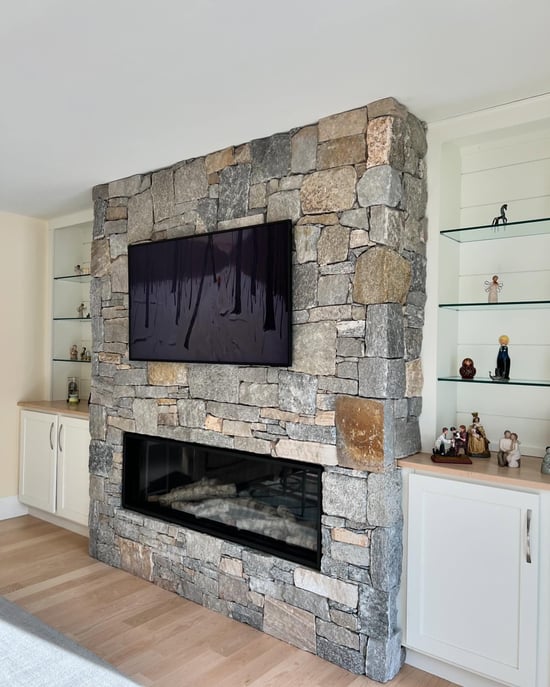
Connecticut Blend Custom Pattern by New England Landscapes, Inc. (supplied by New England Specialty Stone)
✔ 6. Work with Experienced Resources
A strong project starts with the right guidance. Authorized Dealers can help with:
-
Product recommendations
-
Sample selection
-
Estimating materials
-
Installation planning
-
Pattern guidance
Experienced masons and installers also help ensure the finished project looks natural, balanced, and professionally executed.
✔ 7. Plan for the Long Term
Natural stone is designed to last. Choosing a timeless color palette and versatile pattern can help the project continue to feel relevant and connected to its surroundings for years to come. One of the advantages of natural stone is that it ages naturally, developing character over time while maintaining its durability and performance.
Bringing It All Together
The best stone veneer projects begin with thoughtful planning.
By defining the vision, reviewing samples, understanding the application, and working with experienced professionals, the process becomes more efficient and the finished result more successful.
Start exploring Delgado Stone’s natural stone veneer collections, and design possibilities, here.
-2.png?width=150&height=150&name=Untitled%20design%20(2)-2.png)
COMMENTS