


Natural stone can do a lot, but the right material depends on what you're actually trying to accomplish. A stone that works beautifully on an exterior wall may not be the right choice for a patio. A material that creates a great visual accent may not be what you need for a retaining wall or a set of steps. That’s why choosing natural stone starts with the job.
Before getting into specific products, think about what the stone needs to do, where it will be used, and how it will work with the rest of the project. From there, the right material and format become much easier to narrow down.
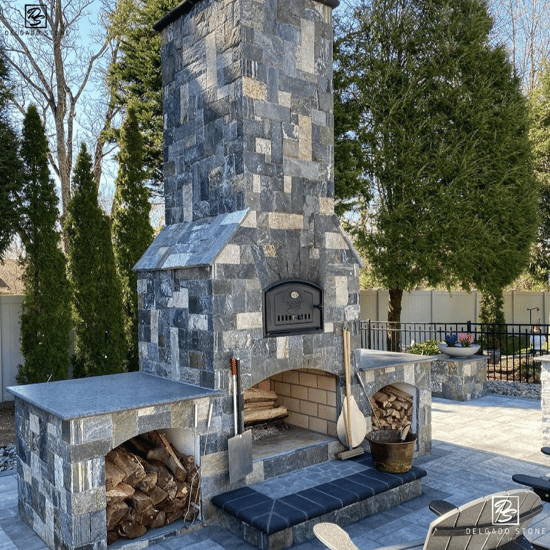
American Mist Roughly Squares & Rectangles Exterior Fireplace
For Walls, Facades & Fireplaces: Veneer
Natural Thinstone Veneer is a versatile choice when you want the look and character of natural stone without the weight and bulk of traditional stone.
It can be used on exterior walls, home facades, fireplaces, chimneys, accent walls, and architectural features. With different patterns and textures available, veneer can create everything from a clean, structured look to something more layered and rustic. The application helps determine the right pattern, profile, and stone for the finished look you're after.
For a Traditional Masonry Look: Full-Bed Stone
Sometimes, the traditional approach is the right one.
Full-Bed Natural Stone provides the depth and substantial appearance associated with traditional full-depth masonry. It can be a strong choice for projects where the stone itself is a major structural or architectural element, particularly when a classic, substantial look is part of the design.
Compared with Thinstone Veneer, Full-Bed requires a different approach to installation and project planning. That makes it especially important to consider the application and construction details before choosing the material.
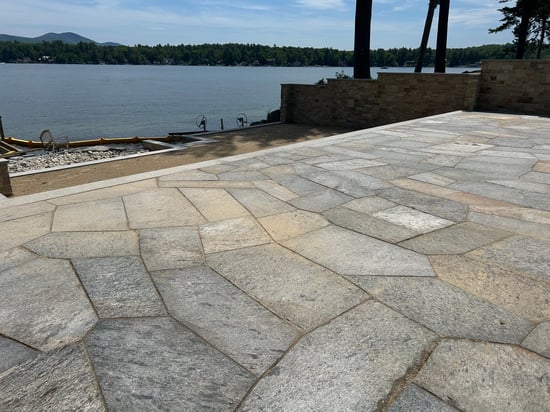 Spruce Mountain Sawn Flagstone Patio by Belknap Landscaping (supplied by NH Thinstone)
For Patios, Walkways & Fire Pit Surrounds: Flagstone
When the stone needs to create a walking surface, Sawn Flagstone is a natural fit!
Sawn Flagstone can be used for patios, walkways, garden paths, outdoor gathering spaces, pool coping, and other hardscape applications. The format, thickness, finish, and surface texture all play a role in how the material performs, and how the finished space looks. And because Flagstone is such a visible part of the landscape, the shape, color, and natural variation can have a big impact on the overall design.
For Steps, Caps & Transitions: Architectural Pieces
Some of the most important pieces of a project aren't necessarily the biggest ones. Steps, treads, caps, sills, and other architectural pieces help create transitions between materials and spaces. They also add finishing details that can make a project feel more complete. These pieces need to be considered for both their function, and how they relate to the surrounding stone and features.

Liberty Hill Ashlar Thinstone Veneer Landscape Walls and Dusty Rose Dimensional Steps supplied by SBI (Heritage Landscape)
For the Details: Think Beyond the Main Surface
Natural stone doesn't have to cover an entire wall, patio, or landscape to make an impact. Small applications can add definition and character to a project. Think accents, columns, outdoor kitchens, entryways, or other architectural details. Sometimes, the right place for stone is the place you weren't expecting it.
Start With the Job
There isn't one “best” natural stone product. There’s the right material for the application, the design, and the way the space will be used. So instead of starting with, “Which stone should I choose?”, start with: “What does this stone need to do?” Once you know the job, it's much easier to find the material that fits. And that's where product knowledge, experience, and the right people can help turn a good choice into the right one!
To explore more natural stone collections, download the catalog.

COMMENTS